What Enable ZK does
Enable ZK is a system built by HumanityLink that lets NGOs distribute humanitarian aid as digital cash instead of paper vouchers or physical money. An aid recipient doesn't need a bank account, a smartphone app, or any crypto knowledge — their “wallet” is simply a QR code, sent over WhatsApp or handed out as a printed sticker. They can spend that money at approved local shops (merchants), send it to other beneficiaries, or convert it to real cash. The aid itself is denominated in USDCx, a dollar-backed stablecoin, so it carries real monetary value rather than being a restricted coupon. The system is currently running in pilots with 2 NGOs in Colombia.
The privacy technology
The distinctive part is the privacy technology. The system runs on the Aleo blockchain, which uses zero-knowledge proofs — a cryptographic technique that lets you prove something is valid without revealing the details. In practice this means that who received aid, how much they hold, and what they spent it on all stay encrypted, while the aggregate totals (how much was issued, spent, and cashed out overall) remain publicly visible on-chain. That combination solves a real tension in humanitarian work: donors and auditors can verify that every dollar is accounted for, while vulnerable recipients — refugees, people in conflict zones — are never exposed by a public transaction trail.
How it works day to day
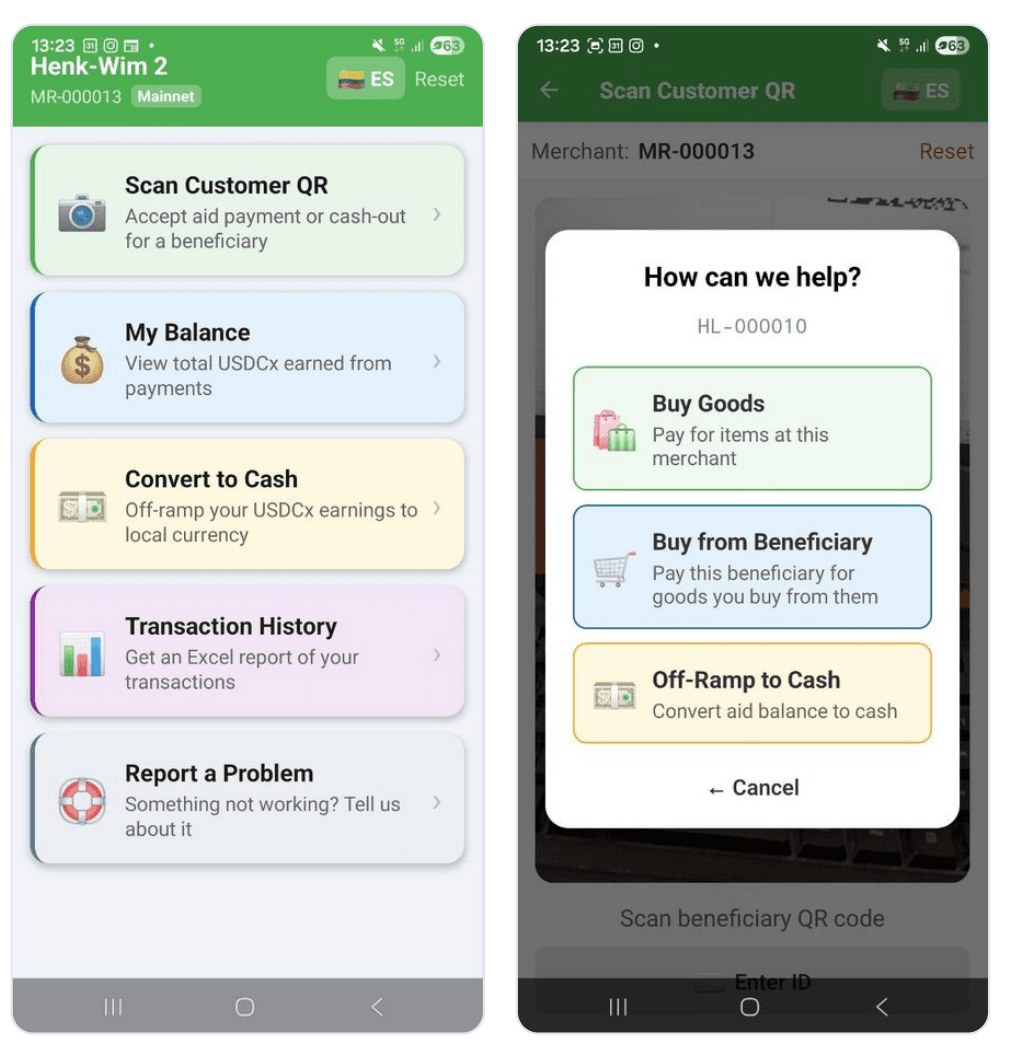
Day to day, three groups interact with the system. Beneficiaries use only WhatsApp and their QR code. Merchants run a simple point-of-sale mobile phone app that scans the QR, takes payment, and lets them convert their accumulated earnings into local cash picked up at any MoneyGram office. NGO staff manage everything through a web dashboard: registering people, issuing aid, approving merchants, pausing programs, and monitoring flows. All the blockchain complexity — keys, proofs, transactions — is handled invisibly by HumanityLink's backend, so no end user ever touches crypto machinery.